
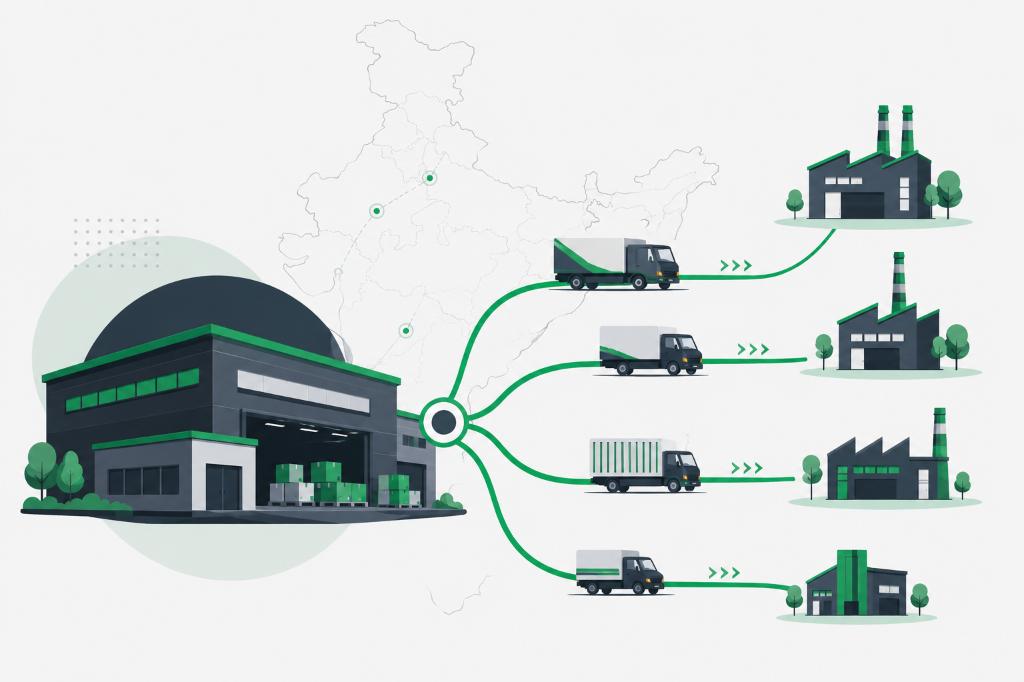
India's economy is undergoing a massive expansion. As small and medium industries evolve across the country, they present unique commercial possibilities. However, accessing these emerging segments requires a strategic shift in how companies approach their sales channels.
Many of these rising small industries start with low-volume material requirements. Because of their size, they cannot buy directly from major manufacturers who demand large minimum order quantities. Instead, they source their materials from local retail traders who offer flexible low-volume purchases and favorable credit terms.
For any manufacturer looking to capture these growing B2B business opportunities in India, building a robust, localized distribution network is not optional—it is the foundation of growth.
The Strategic Influence of Local Dealers
In the Indian B2B landscape, dealers and distributors hold immense influence, particularly within large Original Equipment Manufacturer (OEM) companies.
These local distributors do not win business solely on price; they win because of two critical assets:
- Deep-Rooted Relationships: Distributors have spent years, sometimes decades, building trust with local OEM purchasing managers. Their personal influence can open doors that direct sales teams cannot.
- Inventory Carrying Capacity: B2B buyers in India value immediate availability. Distributors carry inventory of your products locally, mitigating supply chain delays and protecting customers from production halts.
When you partner with an established distributor, you are not just buying a logistics service; you are acquiring an active local partner who carries inventory, markets your product, and manages local credit risks.
3 Pillars of a Successful B2B Distribution Network
To capitalize on B2B distribution in India, manufacturers must build systems that support their channel partners:
1. Maintain Inventory Near the Customer
OEMs will not wait weeks for shipping. Partnering with distributors who have the warehouse capacity to store safety stock locally ensures your product is selected when an urgent requirement arises.
2. Design a Process-Driven Sales System
Do not rely on a single distributor's relationship alone. Build a structured process-driven sales system where you assist your partners with technical training, co-marketing materials, and clear pricing structures to help them close deals faster.
3. Incentivize and Protect Dealer Territories
To build long-term loyalty, protect your distributors from price-cutting competition within their designated regions. When dealers feel their margins are secure, they invest more effort into marketing your brand locally.
Final Thoughts
The evolving Indian industrial sector offers unprecedented growth, but only to manufacturers who understand the value of localization. Expecting a centralized corporate office to handle hundreds of small, regional OEM accounts directly is a recipe for operational failure.
By leveraging the inventory capacity and localized influence of distribution partners, you can build a scalable sales engine that fuels your company's growth for years to come.